New Industry Analysis Establishes Identity as the Primary Operational Control Plane for Agentic AI Workflows


TL;DR
- Autonomous agents require a new operational control plane beyond traditional IAM.
- The shift from human-centric to machine-intent verification is essential for security.
- Agentic Identity Access Platforms (AIAP) provide the new standard for agent governance.
- Interoperability is the primary differentiator in the enterprise AI platform war.
Identity: The New Command Center for Agentic AI
The enterprise tech stack is undergoing a massive, messy, and inevitable transformation. We’re moving past the era of simple generative AI chatbots—those cute little assistants that draft emails—and stepping into the world of autonomous agents. These aren't just tools; they’re digital workers that live, breathe, and execute complex workflows on their own.
But here’s the catch: as these agents gain the autonomy of a privileged insider, our old security playbooks are falling apart. The real battleground for the next decade isn't about which model is smarter. It’s about who controls the "operational control plane." If you can’t govern, orchestrate, and secure this digital labor, you don’t have a workflow—you have a liability.
The Rise of the Operational Control Plane
The market is currently a gold rush. Every major player—Microsoft, Salesforce, ServiceNow, AWS, Google, IBM, Oracle, Palantir, SAP, and UiPath—is scrambling to convince CIOs that their platform is the only logical place to anchor an agentic workforce.
As noted by The Futurum Group, the priority has shifted. It’s no longer about flashy features; it’s about interoperability. Success now belongs to the vendors who can make complex, multi-agent ecosystems play nice together. Because these agents operate at machine speed across fragmented tool chains, the ability to maintain a steady hand on the tiller is the ultimate differentiator.
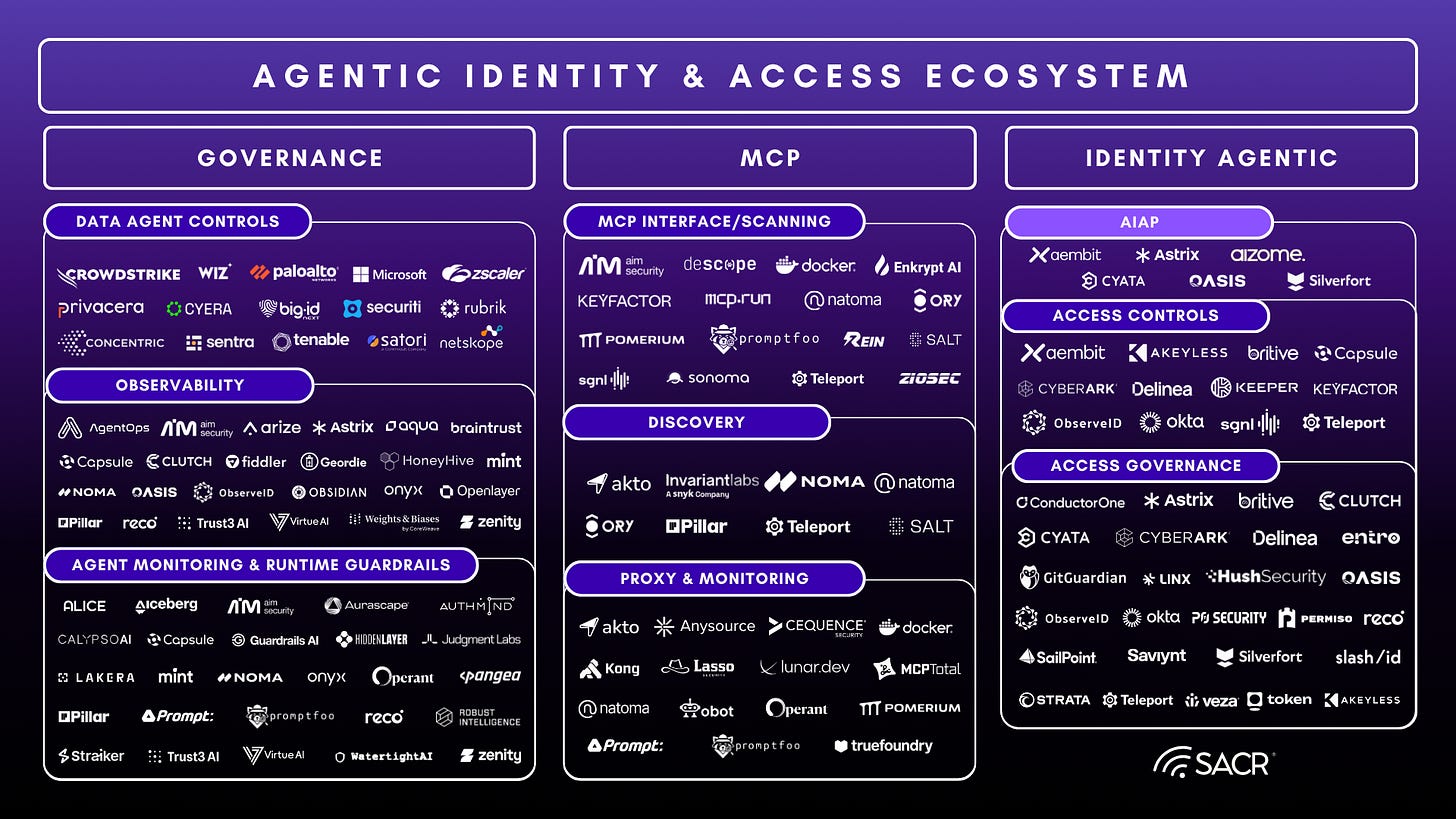
Enter the Agentic Identity Access Platform (AIAP)
Traditional Identity and Access Management (IAM) was built for humans. It assumes a person logs in, does a task, and logs out. But agents? They don't sleep. They don't take breaks. They operate in high-frequency, non-human loops that make static permissions look like a relic of the stone age.
This is where Agentic Identity Access Platforms (AIAP) come in. Think of AIAP as the "new SSO for Agents." As Software Analyst (SACR) points out, the shift here is profound: we are moving from verifying who a user is to validating the intent behind an agent’s action.
If an agent wants to move a million dollars or delete a database, the system shouldn't just ask "Are you authorized?" It needs to ask, "Why are you doing this, and does it align with the current workflow?"
To manage this, these platforms typically operate across a four-part lifecycle:
- Discovery and Registration: Using EDR-style discovery to find every active agent in the wild. You can’t secure what you can’t see.
- Intent and Authorization: Moving beyond "Who are you?" to "What is your intent?" and verifying if that intent is business-appropriate.
- Broker and Injection: Handling the secure, just-in-time delivery of credentials or tokens. No more long-lived secrets sitting in config files.
- Runtime Threat Monitoring: Keeping a constant eye on the agent while it works, ready to pull the plug if things get weird.
The Problem with "Non-Human" Identities
We have a massive blind spot. According to the Non-Human Identity Management Group (NHIMG), roughly 97% of non-human identities are over-privileged. That’s a terrifying number. We are essentially leaving the keys to the kingdom under the mat for every service account and API key.
Worse yet, if a secret is compromised, it stays valid for days. 91.6% of them are still active five days after a potential breach. In an agentic world, five days is an eternity. We need to move toward "Zero-Standing-Privileges" (ZSP), where access is granted only for the exact duration of a task and nothing more.
This shift is even hitting the boardroom. The recent appointment of Monica Enand as Chair of the Board at Curity is a clear signal that identity is no longer just a "login" problem—it’s a runtime governance problem.
The Governance Gap: A Comparison
The transition from human-centric IAM to agent-centric AIAP is a total overhaul of the security philosophy. Here is how the landscape looks today:
| Feature | Traditional IAM/PAM | Agentic Identity Access (AIAP) |
|---|---|---|
| Primary Focus | User Identity (Who) | Agent Intent (Why) |
| Operational Speed | Human-Centric | Machine-Speed |
| Privilege Model | Static/Role-Based | Zero-Standing-Privileges (ZSP) |
| Governance Layer | Access Request | Runtime Enforcement |
The Path Forward
Security teams have spent decades building perimeters. That’s over. In an agentic environment, the perimeter is everywhere. You have to assume your agents are always running, always interacting, and always potentially vulnerable.
The only way to survive this is to embed identity controls directly into the workflow. Every single action an agent takes must be logged, authorized, and monitored in real-time. It’s not enough to set it and forget it.
As the market matures, deep visibility into agent behavior will become the baseline expectation for any enterprise-grade platform. If you aren't focusing on intent-aware authorization and runtime enforcement, you’re just waiting for a breach. By treating identity as the primary control plane, organizations can finally harness the raw power of autonomous agents without losing control of the ship.