NIST and ISO Publish New Governance Frameworks for Securing Autonomous AI Agent Identities

TL;DR
- NIST and ISO are formalizing governance for autonomous AI agent identities.
- AI agents require unique digital birth certificates and strict IAM controls.
- Security teams must implement real-time permission management and bounded scopes.
- NIST AI RMF and ISO/IEC 42001 are essential for operational security.
The National Institute of Standards and Technology (NIST) and its international counterparts have finally dropped the hammer on AI governance. We’re moving past the "experimental" phase of autonomous agents. What was once a wild west of technical tinkering is now officially entering the realm of hard-nosed regulatory compliance.
As AI agents evolve from simple chatbots into autonomous engines capable of planning, executing, and interacting without a human hovering over their shoulder, the old ways of managing software are failing. We need an identity infrastructure that actually works. NIST’s latest push, the AI Agent Standards Initiative, is the first real attempt to stop the bleeding—specifically, to prevent a fragmented mess of proprietary architectures that don’t talk to each other and, more importantly, don’t play by the same security rules.
The Shift Toward Machine-Scale Identity
Here is the bottom line for security leaders: stop treating AI agents like standard software components. They aren't just plugins or scripts; they are machine-scale identities.
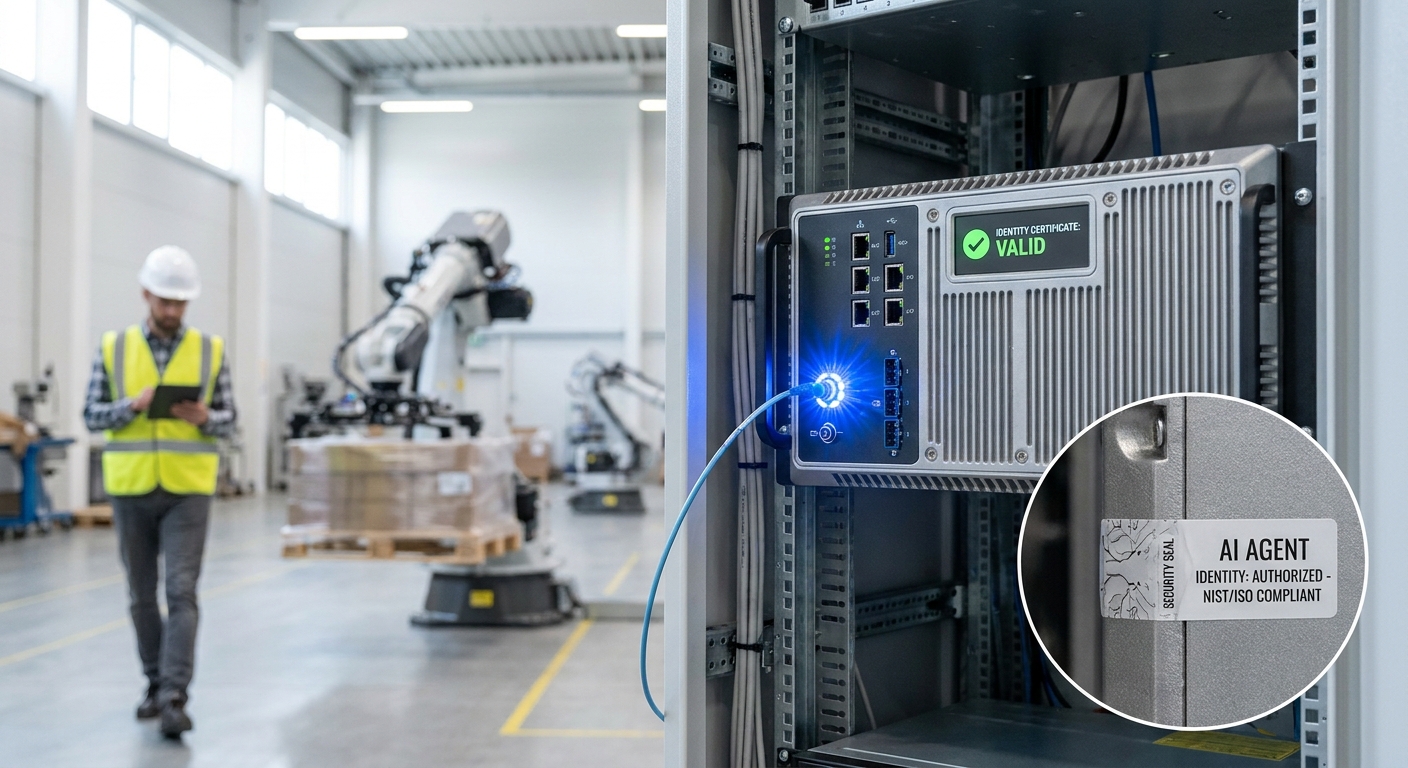
If an agent is running in your environment, it needs a digital birth certificate. That means a clearly defined owner, a documented lifecycle, and ironclad Identity and Access Management (IAM) controls. Think about it—these agents often wield delegated authority that eclipses the human users they’re supposed to be assisting. If an agent has the keys to the kingdom, its risk profile isn't just "different" from traditional enterprise software; it’s exponentially higher.
Effective governance now demands a shift toward real-time permission management. You can no longer set it and forget it. Security teams need to implement "bounded scopes"—essentially, putting the agent on a leash. If an agent doesn't need access to your production database to fulfill its task, it shouldn't have it. And when things go sideways? The ability to kill an agent’s permissions in real-time is no longer a luxury; it’s a requirement.
Integrating Established Risk Frameworks
We aren't starting from scratch here. We’re adapting what we already know to fit the AI era. The NIST AI Risk Management Framework (AI RMF) is your new North Star. It’s built for continuous monitoring, which is exactly what you need when your systems are operating at machine speed. If you aren't prioritizing behavioral observability, you’re flying blind.
To back that up, ISO/IEC 42001 provides the operational discipline that many tech shops lack. This standard is all about the "boring" stuff—onboarding, lifecycle management, and audit trails. It’s not glamorous, but it’s how you prove to regulators that your autonomous systems aren't just a liability waiting to happen. Aligning your internal policies with these international standards is the only way to avoid a massive headache when the auditors eventually come knocking.
Core Pillars of the NIST AI Agent Standards Initiative
Launched on February 17, 2026, the NIST initiative is built on three pillars designed to stabilize the chaos. As these agents start handling the heavy lifting in healthcare, finance, and education, these pillars serve as the guardrails for a transparent, secure environment:
- Industry-Led Standards: NIST is acting as a facilitator, pushing for voluntary guidelines that force consistency across the board, regardless of whose architecture you’re running.
- Open-Source Protocol Development: We need agents to talk to each other securely. By backing community-driven protocols, NIST is trying to dismantle the "proprietary silo" problem that creates massive security gaps.
- Fundamental Security Research: They are doubling down on the hard science—authentication, identity infrastructure, and the kind of security evaluations needed to keep autonomous planning from spiraling out of control.
Regulatory and Public Engagement
The federal government isn't just dictating from an ivory tower; they’re actually listening. NIST has been running a marathon of public and industry engagement, including a Request for Information (RFI) regarding the security of AI agent systems. They want to know where the vulnerabilities are, and they want to hear it from the people who are actually building and breaking these systems in the wild.
They’ve also hosted listening sessions to address barriers to AI adoption. These sessions are critical because they highlight the friction points in high-stakes industries where current security frameworks simply fall flat. It’s a messy, iterative process, but it’s necessary to ensure that the final guidelines aren't just theoretical exercises.
Comparative Governance Approaches
| Focus Area | Governance Objective |
|---|---|
| Identity | Assigning clear ownership and unique machine-scale identity to each agent. |
| Authorization | Implementing strict, bounded access controls based on the principle of least privilege. |
| Observability | Maintaining real-time behavioral monitoring to detect and mitigate anomalous actions. |
| Lifecycle | Ensuring formal onboarding, version control, and auditability of all agent activities. |
Evaluating Risk in Autonomous Systems
We need to stop judging AI agents by their model documentation or their training data. That’s yesterday’s news. Today, you evaluate an agent by its functional autonomy and the breadth of its permissions. If an agent can execute high-impact commands without a human looking over its shoulder, it needs to be treated with the same scrutiny as a privileged administrator.
The line between a standard software tool and an autonomous agent is dissolving fast. NIST’s focus on identity and authorization is a direct response to this reality: when an agent acts on behalf of a user, it expands your enterprise attack surface in ways we’re only beginning to understand. By treating these agents as distinct, accountable entities, you’re not just following a framework—you’re actually securing your network.
This is a dynamic, moving target. As the feedback from these public sessions is synthesized and the guidelines evolve, the landscape will continue to shift. If you’re deploying autonomous agents today, don't just set them loose. Stay glued to these NIST initiatives. The consensus on identity and authorization is hardening, and you don't want to be the one left holding the bag when the new standards become the baseline for doing business.