New Security Framework Established for Model Context Protocol to Govern Autonomous AI Agent Identity

TL;DR
- Traditional human-centric security protocols fail to manage autonomous AI agent identities.
- MCP’s centralized architecture creates high-value targets for schema poisoning and hijacking.
- The shift from securing agents to securing the transport layer is now mandatory.
- Enterprise security must address mixed-identity risks in multi-agent ecosystems.
A New Security Framework for the Model Context Protocol: Taming the Autonomous Agent Wild West
The Model Context Protocol (MCP) is rapidly becoming the connective tissue of the modern enterprise. By acting as a universal abstraction layer, it bridges the gap between massive language models and the internal databases or tools they need to actually do work. But there’s a catch. As we hand over the keys to autonomous agents, the security landscape has shifted under our feet. The Coalition for Secure AI (CoSAI) and the Cloud Security Alliance (CSA) have sounded the alarm: our old, human-centric security playbooks simply don't work here.
The Identity Explosion
Think about how we used to handle security. We had users, we had passwords, and we had sessions. It was manageable. Now, we’re facing an "identity explosion." We aren't talking about a few hundred employees anymore; we’re talking about tens of thousands of individual, autonomous agents, each acting on its own.
Industry standards like OAuth 2.1, OIDC, and SAML were built for people—for humans clicking buttons and typing credentials. They weren't built for ephemeral, autonomous entities that spin up, execute a task, and vanish. These protocols are fundamentally ill-equipped to handle the complex, shifting trust relationships required in a multi-agent ecosystem.
The Problem with Centralized Infrastructure
MCP is brilliant because it’s a universal bridge. But that’s also its greatest weakness. Because it’s centralized, it’s a high-value target. If an attacker manages to compromise the protocol, they don't just get one agent; they get a golden key to the entire operational architecture.
It’s clear that we can no longer rely on securing the agent itself. The focus has to shift to the transport layer. If you’re still relying on prompt sanitization to keep your systems safe, you’re bringing a knife to a gunfight. The risks in AI-mediated systems are evolving faster than most security teams can track:
- Schema Poisoning: Attackers are getting clever, manipulating the LLM into executing unauthorized tools by subverting the underlying protocol definitions.
- Session Hijacking: If the connection between an agent and the MCP server is persistent, it’s a sitting duck for data injection or interception.
- Privilege Escalation: Agents are "mixed identity" actors. They are both autonomous workers and delegates of human users. That duality is a goldmine for attackers looking to elevate their access rights.
- Supply Chain Failures: We’re plugging in third-party tools left and right, often without vetting whether they adhere to even basic security standards.
Rethinking Identity and Access
The Cloud Security Alliance isn't mincing words: we need a specialized IAM framework. In an environment where agents operate in real-time, static permissions are a liability. We need to ditch the old token pass-through methods and move toward token exchange (RFC 8693) to enforce actual security boundaries.
The CoSAI security guide is a sobering read. They’ve mapped out 12 core threat categories—covering nearly 40 distinct attack vectors—that enterprises need to address. From the way inputs are handled to the way code is executed, the surface area for attack is massive.
Defensive Strategy: The MCP Security Proxy
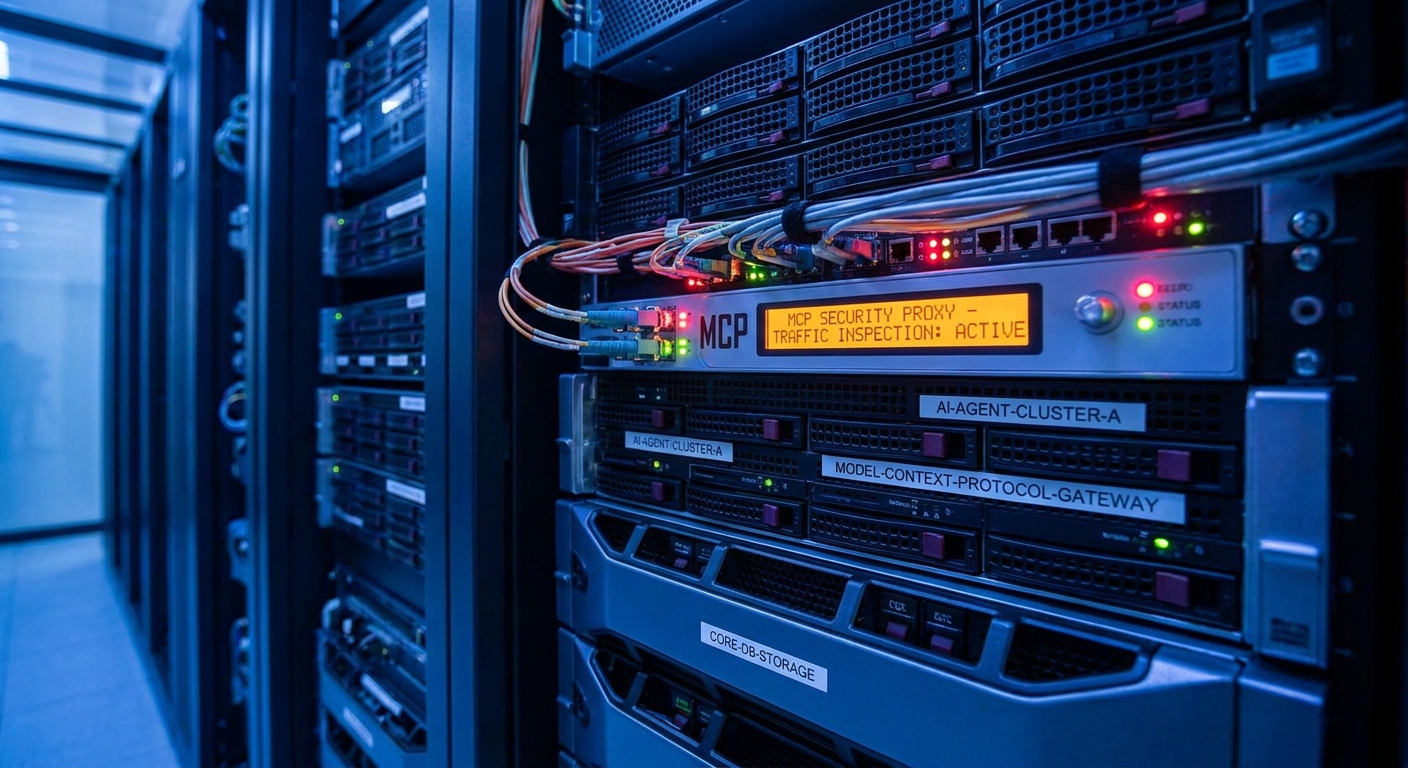
If you’re deploying MCP at scale, you need an architectural gatekeeper. The industry is moving toward the "MCP Security Proxy." Think of this as a bouncer for your AI infrastructure. It sits between the agent and your toolset, performing real-time authorization checks, scrubbing data, and validating schemas before the LLM ever sees a byte of information.
| Control Category | Recommended Strategy |
|---|---|
| Identity | Implement cryptographic workload identities (SPIFFE/SPIRE) |
| Authorization | Utilize token exchange (RFC 8693) instead of direct pass-through |
| Transport | Deploy an MCP Security Proxy for real-time validation |
| Isolation | Use sandboxing technologies (gVisor, Kata Containers, TEEs) |
The Pressure to Perform
This isn't just about internal best practices anymore. Regulations like the EU AI Act are forcing the issue, demanding transparency and actual human oversight in automated workflows. With roughly 60% of enterprises expected to integrate autonomous agents into their daily operations within the next year, the ability to audit and control these systems is moving from a "nice-to-have" to a "must-have" operational requirement.
Adopting a Zero Trust approach for AI-generated content is the only way to scale safely. By moving our defenses to the infrastructure layer, we ensure that even if one agent goes rogue or gets compromised, the rest of the house doesn't burn down. We are moving away from the era of static, human-centric security and into a world where identity-aware, dynamic frameworks are the only thing keeping the lights on.