UK Government Launches AI-Powered Employment Tool, Raising New Questions for Machine-to-Human Identity Governance

TL;DR
- UK government launches AI-powered recruitment to increase administrative efficiency.
- New AI Playbook mandates strict risk management for public sector deployment.
- Shift toward automation raises critical concerns for machine-to-human identity governance.
- Focus on Zero Trust architecture is essential to prevent enterprise service account breaches.
The UK Government’s New AI Hiring Tool: A High-Stakes Bet on Digital Governance
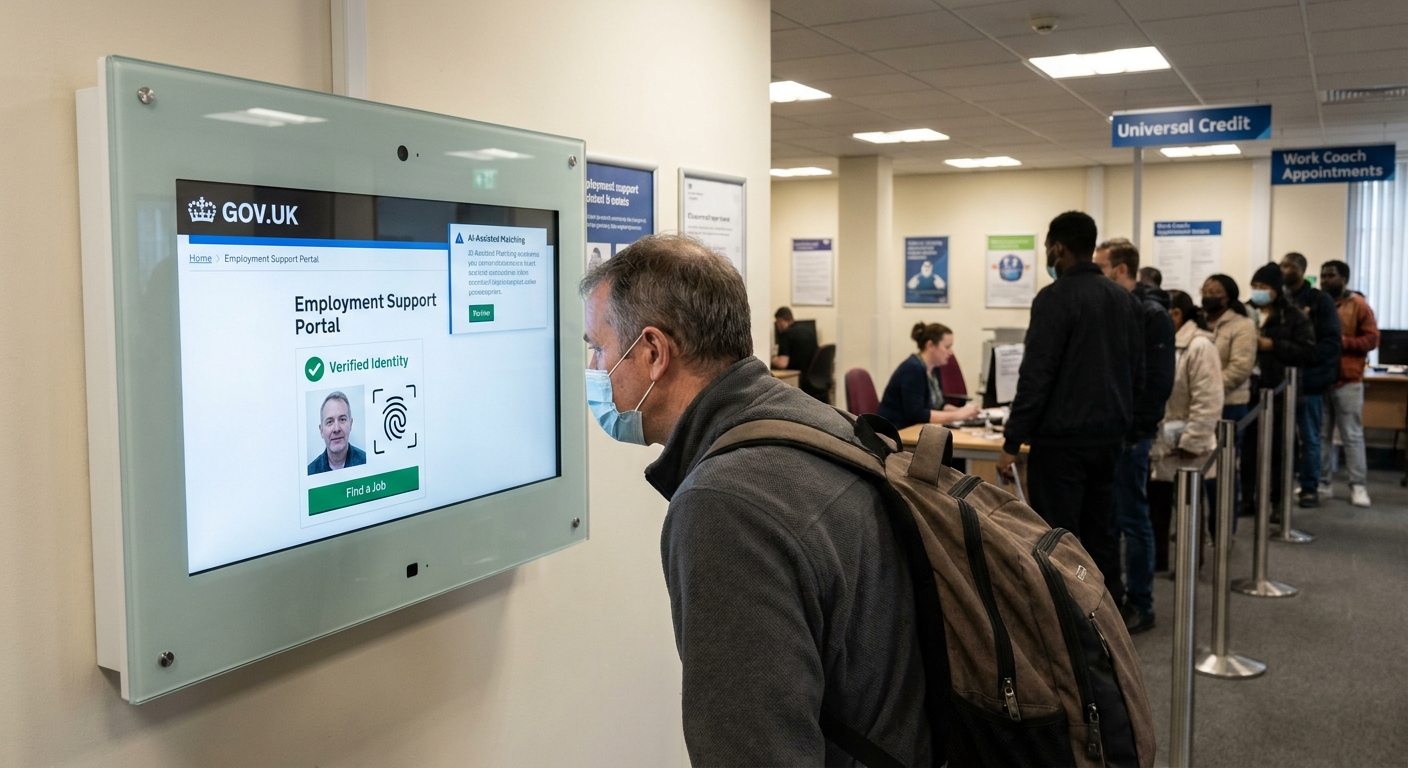
The UK government has officially pulled the trigger on an AI-powered employment tool. Its goal? To overhaul how the public sector recruits and manages its workforce. It’s a bold move that signals a tectonic shift in the state’s relationship with its citizens. This isn't just an IT upgrade; it’s part of a top-down mandate to drag administrative functions into the modern era, trading legacy bureaucracy for the cold, hard efficiency of automated systems.
This rollout follows the release of the AI Playbook for the UK Government. Think of it as a rulebook for the digital frontier—a framework meant to keep machine learning from running off the rails. By moving past the "wild west" phase of early generative AI, the government is trying to bake risk management and quality assurance into the very DNA of public decision-making.
The Strategic Context: Why Now?
The push for rapid AI adoption stems from a simple, if slightly desperate, realization: the state is struggling to keep pace with the digital age. A report from the Tony Blair Institute for Global Change and Faculty paints a compelling picture. They argue that if the government can automate the repetitive, soul-crushing drudgery of administrative workflows, it could unlock up to £40 billion in annual savings.
But this isn't just about balancing the books. It’s framed as an evolution of the social contract. The pitch is that by leaning on technology, the government can offer services that feel more personal and human-centric. That’s the theory, anyway. In practice, it requires a massive overhaul of sovereign infrastructure and a workforce that actually knows how to pull the levers of these new systems.
Guardrails and Governance
As the government plugs AI into more departments, the conversation has shifted toward how to keep it under control. The AI Opportunities Action Plan is the roadmap here. It’s heavy on the "foundations"—the idea that if you don't build trust and security today, the whole project will collapse tomorrow.
The current strategy relies on a few core pillars:
- Standardized Business Cases: No more "AI for the sake of AI." Departments have to prove their work, justifying every implementation with a hard look at the societal and operational fallout.
- Risk Management Protocols: This is about keeping the robots honest. It requires dedicated oversight to spot algorithmic bias before it wreaks havoc on public services.
- Cross-Sector Collaboration: The government isn't going it alone. They’re leaning on the Alan Turing Institute for academic rigor while bringing in the heavy hitters—Google, Microsoft, and AWS—to handle the technical heavy lifting.
- Continuous Training: They’re turning dry technical guidance into e-learning courses. The goal is to make sure the average civil servant isn't just a bystander, but an active manager of these digital tools.
The Identity Governance Hurdle
Here is where it gets tricky. When you automate hiring, you aren't just processing paperwork; you’re making life-altering decisions about people’s careers. The government’s Generative AI Framework for HMG acknowledges this, stressing the need for "human-in-the-loop" oversight. But how do you maintain that human touch when the machine is doing the heavy lifting?
| Component | Objective | Primary Focus |
|---|---|---|
| AI Playbook | Operational Guidance | Risk, Quality, and Governance |
| Action Plan | Strategic Roadmap | Public Benefit and Foundations |
| HMG Framework | Ethical Deployment | Transparency and Human Oversight |
Caution vs. The Urgency of Change
There is a palpable tension in Whitehall right now. The government has historically been allergic to risk—a "better safe than sorry" culture that has defined the civil service for decades. But as the Future of Britain project points out, that caution is starting to look like a liability. If the state refuses to modernize its infrastructure, it risks becoming an obsolete relic, unable to meet the demands of a fast-moving economy.
The current strategy is an attempt to bridge that gap. It’s a move away from ad-hoc, "let’s try this and see what happens" tech adoption toward a holistic model. They aren't just deploying software; they are trying to build an institutional capacity to audit, monitor, and scale these systems.
The Litmus Test for the Future
The success of this employment tool is the ultimate test case. If it works, it becomes the blueprint for the rest of the public sector. If it fails, it could set back digital transformation for a generation.
The real challenge, however, isn't technical—it’s cultural. As the state becomes more automated, the risk is that it loses the very thing that makes governance "public": the ability to understand, empathize, and account for the individual.
Moving forward, the government plans to iterate on its guidance as the tech evolves. They are betting that by fostering a culture of continuous learning and keeping a tight grip on the reins, they can build a system that is both ruthlessly efficient and fundamentally accountable. Whether they can actually pull off that balancing act remains to be seen. For now, the experiment is live, and the stakes couldn't be higher.